


IVF Treatment in Ahmedabad
In vitro fertilisation popularly referred to as IVF treatment is commonly opted by many couples when they have exhausted other methods of conception. The procedure of IVF at Sunflower Infertility & IVF Center in Ahmedabad starts by determining the cause why the couple is struggling with conceiving. As for that couple who is trying to get pregnant a certain drug regimen would be given to one with blocked fallopian tube differently from one with low sperm count or a low ovarian reserve, for instance.
What Is IVF Treatment?
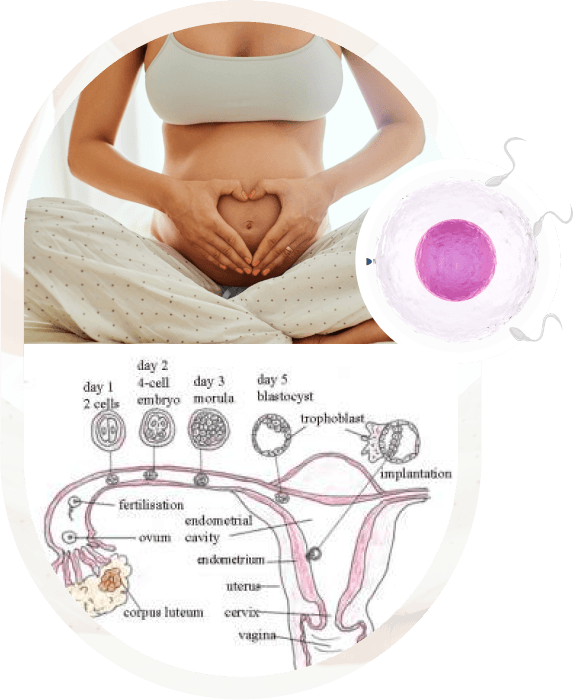
What is IVF treatment? It is a procedure that takes place in the lab where the egg is fertilised with the sperm. The process involves fertilising and growing fertilized embryos in the lab and then moving that embryo inside the uterus. In general, the procedure with regard to open IVF treatment consists of six different stages. The first stage involves stimulating women’s ovaries so that they produce a number of eggs, which after that are collected, fertilized in the lab with the use of sperm, embryos are cultured, then embryos are transferred into the uterus and finally, a pregnancy test is performed two weeks later.
When Is IVF Recommended?
A specialist might recommend IVF treatment for pregnancy for several distinct reasons:
Bilateral blocked tubes. When both fallopian tubes are blocked, sperm can't reach the egg at all. This often follows genital tuberculosis, pelvic inflammatory disease, endometriosis, or prior pelvic surgery.
Severe male factor infertility. Natural conception generally needs at least 10 million motile sperm per ejaculate. Well below that, sperm can't reliably reach the egg on their own.
Absent or damaged fallopian tubes. Rarely present from birth, or damaged later by adhesions, surgery, or infection.
Endometriosis. It affects approximately 10% of women of reproductive age and can adversely affect egg quality and fertilization processes, as well as the ability of the uterus to support implantation.
Advanced maternal age. After 38, nearly all other fertility treatments show lower rates of success, so IVF becomes the first viable option.
Decreased ovarian reserve. Since reserve keeps declining over time, waiting too long with less intensive treatments can mean losing the window to use one's own eggs.
Unexplained infertility or repeated IUI failure. After three or more failed IUI cycles, IVF tends to be both more cost-effective and more likely to succeed.
How IVF Works
As you can see in the image, IVF is a stepwise process
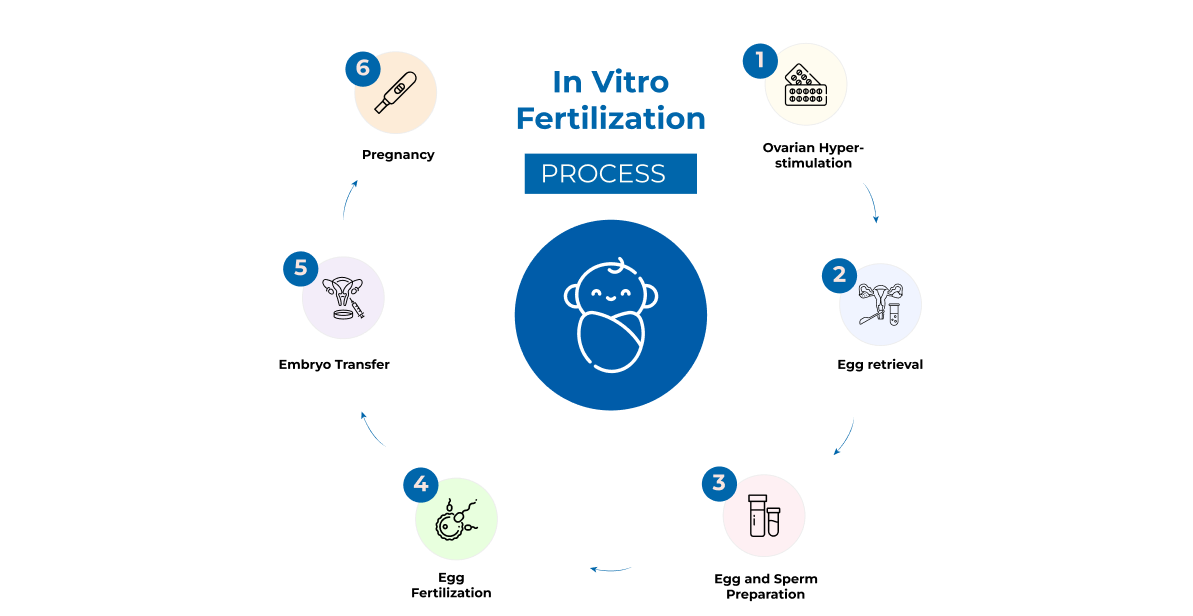
Firstly, hormone injections are given to the female partner for 8 -10 days to stimulate her ovaries.
Secondly, eggs are retrieved from the ovaries through a painless process called transvaginal sonography guided needle aspiration performed under anaesthesia, which does not involve any stitches or cuts.
Then, the fertilisation of the eggs is carried out in an IVF lab using either the partner's ejaculated sperm or surgically obtained sperm.
Next, the embryos are cultured for 2 - 5 days and assessed for growth.
Finally, after embryo transfer, the best-quality 1 - 2 embryos are put back inside the womb while the remaining ones are frozen.
IVF Success Rates
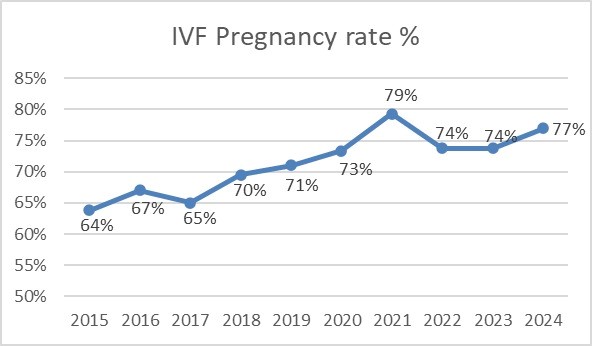
With so many centres now offering IVF, success rate is one of the more honest things to compare, provided it's shared clearly, by embryo transfer and by cycle, rather than as a single headline figure. At Sunflower, we perform over 1,500 IVF and ICSI procedures a year, have supported more than 22,000 live births through IVF and ICSI, and our overall success rate in IVF ART sits between 70% and 76%.
What Determines the Cost of IVF
Over the past decade, the cost of IVF has not seen much change.
Factors affecting the cost of IVF include the type of medication used in the IVF process and lab setups and materials.
While lowering of the costs may be possible, it comes at the expense of IVF success rates.
Nonetheless, IVF procedures in India are about 10 times less expensive than in the US and UK.
Furthermore, the success rates of IVF treatment in India are comparable to those seen in top centres in the world.
Because of this, India's emergence as a medical tourism centre for IVF is not surprising.
Choosing an IVF Centre in Ahmedabad
A lot of people searching for the best IVF centre in India are really trying to answer a simpler question: will this place actually work for someone in my situation? That's worth answering with real numbers, not a headline claim.
The same applies to anyone comparing the best IVF treatment in India more broadly. A centre willing to show its actual outcomes, by embryo transfer and by cycle, is telling you more than one that just says its results are strong.
IVF treatment in India varies a fair amount between centres, not just in cost but in how much they're willing to share about how their patients actually do.
Closer to home, if you're specifically looking at IVF treatment in Ahmedabad, it's worth asking about the lab setup, who's performing the procedures, and how many cycles the centre actually sees in a year.
For anyone comparing the best IVF treatment in Ahmedabad, Sunflower's numbers are the ones we'd point you to directly: over 1,500 IVF and ICSI cycles a year, and a 70 to 76% success rate in IVF ART.
As an Ahmedabad IVF hospital, we'd rather you judge us on those figures than on a label.
And if you're widening the search to the best IVF hospital in Gujarat, the same three things are worth checking wherever you land: real success-rate data, genuine cycle volume, and a straight answer about your own chances.
Advanced IVF treatment options like ICSI and freeze-all embryo transfer aren't relevant to every patient, but knowing whether a centre offers them, and explains clearly when each one applies, is a reasonable way to judge how current their approach actually is.
Frequently Asked Questions
What is IVF treatment, in simple terms?
IVF is a process when an egg and sperm are fertilised in a lab instead of inside the body, and the embryo that forms is placed into the uterus afterward. It's usually the option your specialist reaches for once other treatments haven't gotten you there.
How long does one IVF cycle take?
Roughly 4 to 6 weeks, start to finish, from your first stimulation injection to the day you take the pregnancy test.
Does IVF hurt?
Less than most people expect, honestly. The injections and monitoring appointments are minor. Egg retrieval is done under general anaesthesia, so you won't feel it happening, though some cramping afterward is pretty normal.
How is IVF different from ICSI?
With IVF, sperm and eggs are placed together and left to fertilise on their own. With ICSI, an embryologist injects a single sperm directly into each egg. ICSI usually comes into play when sperm quality is a concern, or if fertilisation didn't happen naturally in a previous cycle.
Why do success rates vary so much from person to person?
Because a lot goes into it, your age, what's actually causing the infertility, the quality of the embryos, and which protocol your specialist uses. That's why you'll usually hear a range rather than one fixed number. Your own odds depend on your own situation.
If you're trying to understand whether IVF is the right next step, our specialists can walk you through it based on your own test results.
Talk to a Fertility Specialist