

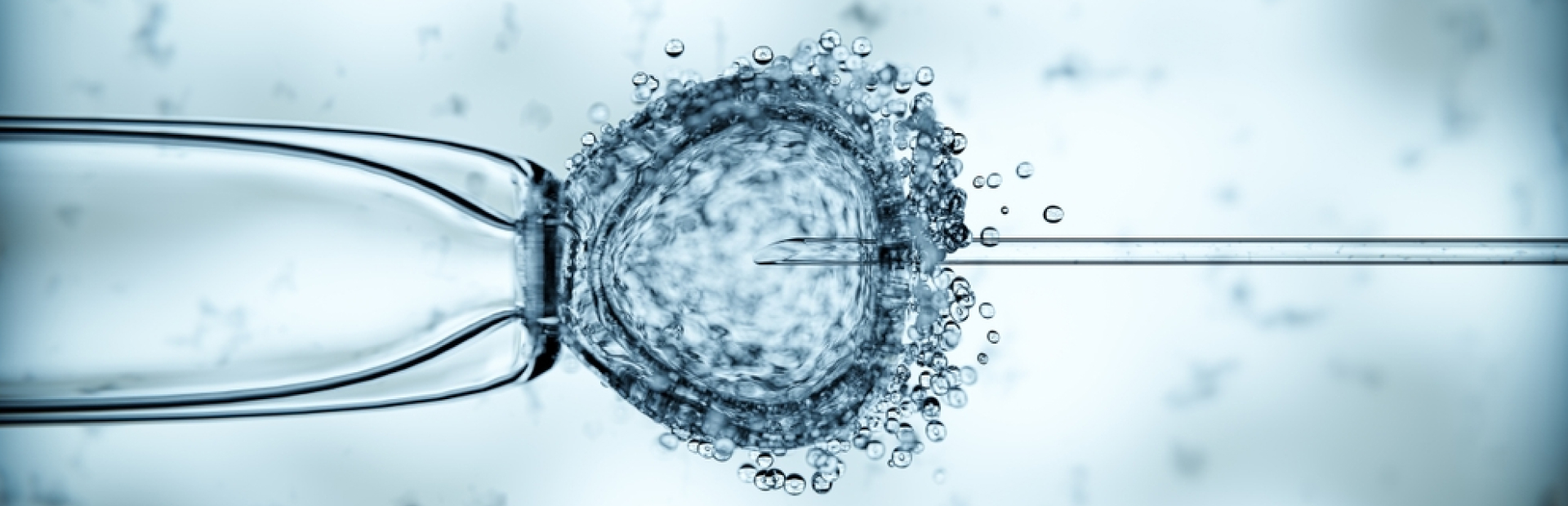
ICSI Treatment in India
ICSI, also known as intracytoplasmic sperm injection, is a technique used inside an IVF cycle to fertilise an egg by injecting a single sperm directly into it. It's not really a separate treatment from IVF. Think of it as a more targeted way of getting fertilisation to happen, used when there's a specific reason to think it might not happen on its own.
What Is ICSI?
ICSI treatment involves the injection of a single sperm into the center of the egg by an embryologist with specialized micromanipulation tools and an inverted microscope to achieve real precision. That’s unlike traditional IVF, where sperm and eggs are simply put together in an equipment and left to fertilize themselves.
ICSI generally helps in two situations. Either the sperm quality isn't good enough to fertilise an egg unassisted, or there's something about the egg itself, a change in the membrane surrounding it, say, that's getting in the way of fertilisation happening the usual way.
Before any of this can happen, you'd go through the same preparation as a standard IVF cycle. Ovarian stimulation, then egg retrieval, so there are several eggs available to work with.
When Is ICSI Recommended?
ICSI fertility treatment tends to come up in fairly specific situations, and most of them trace back to sperm quality, sperm quantity, or a fertilisation attempt that didn't work last time:
Unexplained fertilisation failure in a previous IVF cycle. If eggs didn't fertilise using conventional IVF before, ICSI is often recommended next.
Reduced sperm concentration, provided enough viable sperm can still be recovered for injection.
Reduced sperm motility, including sperm that's completely immotile (as seen in conditions like Kartagener's syndrome), as long as the sperm itself is viable.
A high proportion of abnormally shaped sperm, including round-headed sperm, a condition known as globozoospermia.
A complete lack of sperm in ejaculate (obstructive azoospermia) occurs due to a blockage, which can be a defect that you're born with (absent vas deferens), an infection that resulted in scarring, or a vasectomy that was not performed well. In such cases, sperm is obtained through testicular sperm extraction, or TESE, as the name suggests, for use in ICSI.
Complete absence of sperm due to a production problem (non-obstructive azoospermia). If a testicular biopsy shows sperm is being produced in at least some areas of the testis, TESE may still be able to retrieve enough viable sperm.
Ejaculatory dysfunction, whether from retrograde ejaculation (sperm can usually be recovered from urine in these cases) or paraplegia (using electroejaculation or TESE).
Immunological factors, such as antisperm antibodies present in the female partner's blood or follicular fluid, or on the sperm itself, sometimes linked to a vasectomy or a prior genital tract infection.
Testicular cancer patients who had semen samples frozen before starting treatment.
In vitro matured eggs, or eggs that were vitrified and later warmed for use.
Couples who are undergoing a biopsy as part of their infertility treatment for genetic carrier screening.
Partners who are serodiscordant, i.e. one partner has HIV infection, hepatitis B, or hepatitis C.
How ICSI Is Performed
It's a very subtle procedure and it all takes place under a microscopic lens. A ripe is secured by a specialised holding pipette and simultaneously, the picking and fixing of a single sperm by a thin hollow needle is carried out.
That needle is then carefully guided through the zona, the egg's outer shell, and into the cytoplasm inside. The sperm goes in, the needle comes out, and the eggs are checked the next morning to see whether fertilisation actually happened.
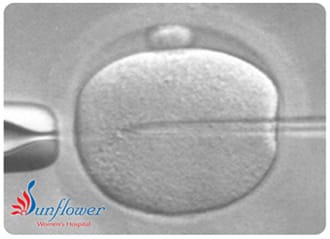
ICSI Fertilisation Rate
Among eggs injected with viable sperm, ICSI usually results in normal fertilisation somewhere between 70 and 85% of the time. Worth being clear on what that number actually means though: it's a fertilisation rate, how many of the injected eggs go on to fertilise, not a pregnancy rate. Whether that fertilisation turns into a viable embryo, and eventually a pregnancy, comes down to several more steps after this, and your specialist can talk you through what that looks like for your own case.
ICSI vs Conventional IVF
ICSI is always done alongside IVF, never instead of it. The real difference comes down to how fertilisation happens. Conventional IVF just leaves sperm and egg together in the lab and lets fertilisation happen naturally. ICSI skips that uncertainty by putting a single sperm directly inside the egg. That's why it's generally kept for cases where natural fertilisation probably won't work on its own, rather than something every IVF cycle needs by default.
Choosing an ICSI Treatment Centre
If you're comparing the best ICSI treatment in India, the things actually worth asking about are: how advanced the embryology lab is with ICSI in particular, what equipment they're using, and whether they're upfront about whether ICSI genuinely applies to your case rather than just offering it by default.
More broadly, ICSI treatment in India is available at a lot of centres now, and honestly, quality mostly comes down to the embryology lab itself. ICSI is a technique which needs direct, detailed handling and precision. That means, the skill of the person working on it matters much more than practically everything else.
If you're looking to find an ICSI treatment specialist in India, it's best to ask them directly what were their cases in past that they treated with problems similar to yours, i.e. severe male factor infertility, a previous fertilisation attempt that was unsuccessful, or the need for genetic testing like PGS or PGD.
A good ICSI treatment centre, in addition, should be able to explain to you, where the step of ICSI actually fits in your overall IVF cycle. ICSI is a single part of an intricate, large process, not a stand-alone treatment that works by itself.
Frequently Asked Questions
What is ICSI treatment?
It's a technique used inside an IVF cycle where an embryologist injects a single sperm directly into an egg, rather than just letting sperm and egg fertilise on their own. It usually comes up when sperm quality, sperm count, or a previous fertilisation attempt that didn't work makes conventional IVF less likely to succeed.
Is ICSI basically the same as IVF?
Not quite. ICSI always happens as part of an IVF cycle, with the same ovarian stimulation and egg retrieval beforehand. The real difference is just in the process of how the egg actually gets fertilised.
Who actually ends up needing ICSI?
Mostly couples dealing with male factor infertility, whether that's a low sperm count, poor motility, oddly shaped sperm, or no sperm at all in the ejaculate. It's also used when a previous IVF cycle didn't fertilise, and in some cases involving genetic testing or serodiscordant couples.
Does ICSI guarantee fertilisation will happen?
No technique can promise that, honestly. ICSI leads to normal fertilisation in roughly 70 to 85% of eggs injected with viable sperm, which is a lot better than you'd expect without it in these specific situations, but it's still not a guarantee for every egg or every patient.
Can sperm be retrieved surgically if there's none in the ejaculate?
Yes. If there's no sperm present, it can often be retrieved directly from the testicle through a procedure called TESE, as long as the testis is still producing sperm somewhere.
If ICSI has been mentioned as an option for your treatment, or you'd like to understand whether it applies to your situation, our specialists can walk you through it based on your own test results.
Talk to a Fertility Specialist