

Two-Week Wait After Embryo Transfer: 6 Safe Dos & Don’ts
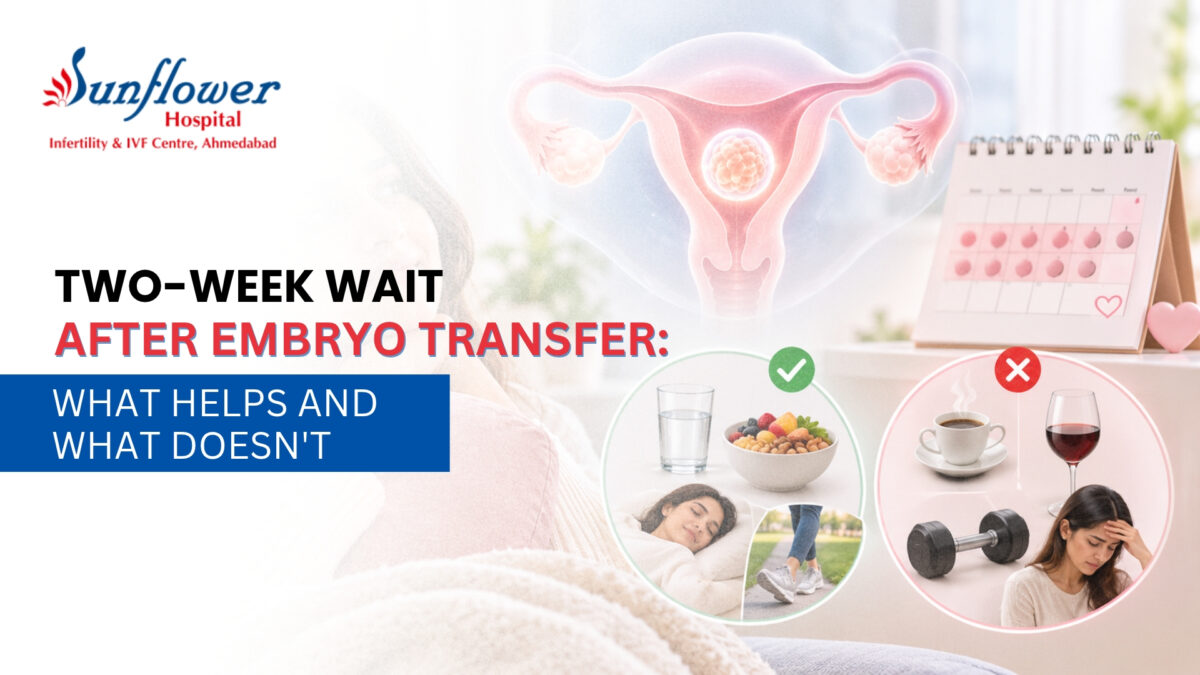

The two-week wait after embryo transfer. Four words that carry so much weight when you are in the middle of it. You have done the injections, the scans, and the procedure itself. Now you are home, and suddenly every twinge and cramp feels like a signal you need to decode. Your phone is probably full of searches you are too embarrassed to admit to anyone.
Here is the honest truth. There is no magic trick that guarantees implantation, and anyone who says otherwise is selling something. But there are sensible things you can do to support your body during this window. Not because a bowl of pineapple will make it happen, but because looking after yourself gives your body the best environment to do what it already knows how to do.
The one thing you cannot skip: your medication
Take your progesterone, estrogen, or whatever your clinic prescribed exactly as directed, at the same time every day. Set alarms and reminders. Progesterone supports the uterine lining and early pregnancy, so skipping doses or changing the schedule because you feel fine is a mistake you do not want to make.
- Never stop, reduce, or change a dose without your doctor’s advice, even if you see spotting or feel nothing.
- Check with your clinic before taking any new medicine, painkiller, herbal product, or supplement.
Rest After Embryo Transfer Does not Mean Bed Rest
You do not need to lie flat for days. Studies have found that strict bed rest does not improve pregnancy rates after embryo transfer [add source], and staying completely still can leave you stiff and miserable.
Rest sensibly for the first day or so, then return to gentle activity: short walks, light stretching, normal daily tasks. Follow your clinic’s specific instructions, and avoid anything strenuous:
- No heavy lifting or intense workouts
- No hot yoga, saunas, or very hot baths
- No twisting or jarring movements, especially if your ovaries are still enlarged from stimulation
What to Eat After Embryo Transfer
No single food will make an embryo implant. But a balanced diet supports your overall health and hormone balance. Think Mediterranean style: colourful vegetables, whole grains, lean protein, and healthy fats from olive oil, nuts, and avocado.
- Fish: choose low-mercury options and limit the rest [add source for guidance].
- Food safety: avoid raw or undercooked meat, fish, and eggs, and unpasteurised dairy.
- Alcohol: avoid it completely.
- Caffeine: Keep caffeine under about 200 mg a day, roughly one cup of coffee. [add source].
- Processed and sugary foods: limit them. They add little and can unsettle your blood sugar.
- Pineapple core, papaya, and other “implantation foods”: there is no proven benefit, so do not stress over them.
- Hydration: stay well hydrated. If you had a very high response to stimulation, follow your doctor’s advice on how much to drink.
- Herbal teas and supplements: check with your clinic first, because some can interact with your medication.
Your mind is part of this too
There is no strong evidence that everyday stress lowers the chance of IVF success [add source]. But the wait can wreck your sleep, your appetite, and your sense of calm, and that matters for you as a person. Acknowledge that it is hard, then find small ways to manage it.
- Take a daily walk
- Keep a journal
- Watch a show you actually enjoy instead of checking symptoms on forums
- Set boundaries with relatives and friends who keep asking for updates
The symptoms game is a trap
You will feel things: cramps, tender breasts, bloating, fatigue, maybe light spotting. These are often caused by the progesterone you are taking, not by implantation. And plenty of women who get pregnant feel nothing at all during the wait. A lack of symptoms does not mean failure, and the presence of symptoms does not mean success. Do not read your body like tea leaves. The blood test is the only answer that counts.
Do not test early at home. Testing too soon gives unreliable results. If you had a trigger injection (hCG), it can stay in your body for days and cause a false positive. Test only on the date your clinic gives you. This is usually a blood test (beta hCG) about 9 to 14 days after the transfer, depending on your protocol and the embryo stage.
When to call your clinic
Most women feel only mild symptoms, but some signs need prompt medical attention. Contact your clinic or go to the nearest emergency department if you have:
- Severe or rapidly worsening bloating, rapid weight gain, or breathlessness (possible ovarian hyperstimulation syndrome, OHSS)
- Passing very little urine
- Heavy vaginal bleeding (soaking a pad within an hour)
- Severe pain in the lower abdomen, especially on one side, or shoulder-tip pain, dizziness, or fainting (an ectopic pregnancy is more likely after IVF)
- Fever or foul-smelling discharge
Read more about possible IVF complications.
Habits that support you during the wait
There is no proven way to improve implantation through lifestyle alone, so these are about looking after yourself, not guarantees. Gentle movement, good sleep, calm routines, taking your medication on time, and avoiding smoking and alcohol are steady habits that keep you healthy and comfortable.
Extreme diets, detoxes, and lying upside down with your legs in the air will not harm you in most cases, but they will not change your outcome either.
Quick guide: what helps and what to avoid
| Area | What helps | What to avoid |
| Medication | Taking it on time, every day | Stopping or changing doses without advice |
| Activity | Short walks, light stretching, normal tasks | Heavy lifting, intense workouts, saunas, hot yoga |
| Food | Balanced, Mediterranean-style meals | Alcohol, raw or undercooked food, excess caffeine |
| Rest | Sensible rest in the first day or so | Strict bed rest for days |
| Mind | Walks, journaling, calming routines | Constant symptom checking and early testing |
| Supplements and herbs | Only what your clinic approves | Herbal blends and new supplements without checking |
The bottom line
You cannot control whether this embryo implants. That is a hard sentence to sit with, but it is true. What you can control is taking your medication on time, eating food that nourishes you, moving gently, sleeping enough, and protecting your mental space.
That is not passive. It is giving your body a steady, calm, supported environment. And whatever the outcome, you will know you did your part with care.
Frequently asked questions
How Long Is the Two-Week Wait After Embryo Transfer?
It is the time between embryo transfer and your pregnancy blood test, usually around 9 to 14 days. Your clinic will give you an exact date.
Can I travel or go back to work after embryo transfer?
Most women can return to light work within a day or two. Avoid long, tiring journeys and heavy physical work, and follow your doctor’s advice.
Is it safe to have sex after embryo transfer?
Many clinics advise avoiding intercourse until after the pregnancy test. Ask your doctor what they recommend in your case.
Is spotting normal after embryo transfer? Light spotting can be normal, but do not assume it is a sign of implantation or of failure. Call your clinic if bleeding is heavy or comes with severe pain.
When should I take a pregnancy test?
Only on the date your clinic gives you, usually a blood test (beta hCG). Home tests taken earlier can be wrong, especially after a trigger injection.
Do I need bed rest after embryo transfer?
No. Rest sensibly for the first day or so, then return to gentle activity unless your doctor says otherwise.
Can stress cause implantation failure?
There is no strong evidence that everyday stress lowers IVF success [add source]. But it is worth managing for your own wellbeing.
Why choose Sunflower Hospital?
The wait is easier when you trust the team beside you. Here is what you can expect at Sunflower:
- Over two decades of experience: helping families since 2004 under Dr. R G Patel, a National ART & Surrogacy Board member.
- A proven track record: more than 1,500 IVF and ICSI procedures a year and over 22,000 live births.
- Complete care under one roof: IVF, embryo transfer, blastocyst culture and transfer, and cryopreservation.
- Personal guidance from day one: send your reports by email or WhatsApp and our doctors will give you an expert opinion.
- Convenient locations: Memnagar, Naroda, Gandhinagar, Surat, and Naranpura.
Going through an embryo transfer and need support during the two-week wait? Sunflower Hospital offers compassionate care and expert guidance every step of the way. Book a consultation and let our fertility team be part of your journey.
related blog
Two-Week Wait After Embryo Transfer: 6 Safe Dos & Don’ts

Can You Unblock Fallopian Tubes Naturally? Castor Oil, Herbs and What Actually Works