

IVF vs ICSI — What’s the Difference and Which One Is Right for You?

Published: March 2026 | By Sunflower Women’s Hospital Team
When couples begin exploring assisted reproduction, two terms come up repeatedly: IVF and ICSI. They are often spoken of interchangeably, but they are not the same procedure. Understanding the difference between IVF and ICSI — and knowing when each is appropriate — can help you have more informed conversations with your doctor and set realistic expectations for your treatment.
Introduction to Fertility Treatment
Fertility treatment offers hope to individuals and couples who are struggling to conceive naturally. With advances in assisted reproductive technology, there are now several effective options available to address a wide range of infertility challenges. Among the most widely used are In Vitro Fertilization (IVF) and Intracytoplasmic Sperm Injection (ICSI). These treatments are designed to help overcome issues such as unexplained infertility, severe male infertility, and blocked fallopian tubes, giving many people the chance to build their families.
IVF and ICSI are both forms of in vitro fertilization, where eggs and sperm are brought together outside the body in a laboratory setting. While both approaches aim to achieve successful fertilization and pregnancy, they differ in how the sperm and egg are combined. Understanding the distinctions between IVF and ICSI is essential for anyone considering fertility treatment, as the right choice can depend on factors like male infertility, sperm quality, and the specific cause of infertility. By learning about these assisted reproductive techniques, you can have more informed discussions with your fertility specialist and make decisions that best suit your needs.
Fertility Treatments Overview
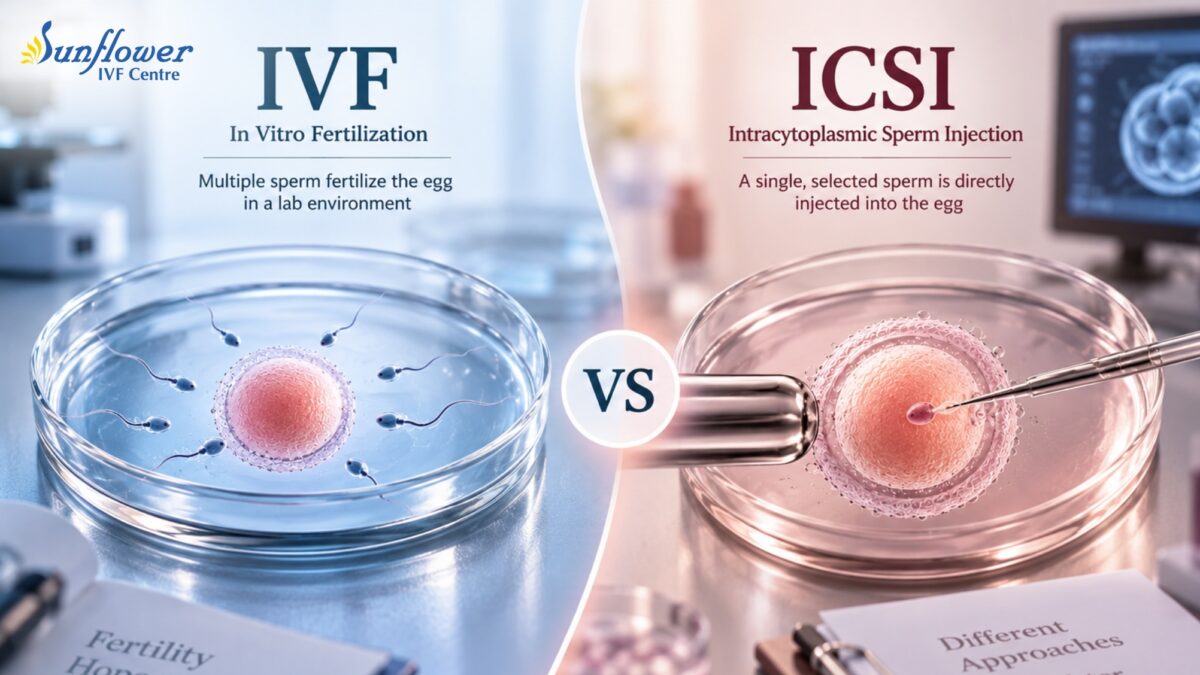
IVF and ICSI are two of the most advanced fertility treatments available, each designed to facilitate fertilization outside the human body. The main difference between these two assisted reproductive technologies lies in how the sperm meets the egg. In conventional IVF, eggs and sperm are combined in a laboratory dish, allowing for natural sperm penetration and fertilization to occur as it would inside the body. This method is often recommended for couples facing unexplained infertility, mild male infertility, or when sperm count and motility are within normal ranges.
In contrast, ICSI—short for intracytoplasmic sperm injection—involves the direct injection of a single sperm into each mature egg. This technique is especially beneficial for severe male factor infertility cases, such as very low sperm count, poor motility, or abnormal sperm morphology. ICSI is also the preferred option when using surgically retrieved sperm, after previous IVF failures, or when preimplantation genetic testing is planned to screen embryos for genetic conditions before transfer.
Both IVF and ICSI require several key steps: ovarian stimulation to produce multiple eggs, egg retrieval, fertilization in the laboratory, and embryo transfer into the uterus. However, the fertilization stage is where the two treatments differ most significantly. The decision to use IVF or ICSI depends on various factors, including the underlying cause of infertility, sperm quality, previous treatment outcomes, and individual circumstances. Consulting with a fertility specialist is crucial to determine which treatment option is best suited to your unique situation, ensuring the highest chance of success on your fertility journey.
What Is IVF?
IVF stands for In Vitro Fertilisation. IVF treatment is a common approach for various infertility issues, and vitro fertilization treatment is a well-established fertility treatment. “In vitro” is Latin for “in glass” — meaning fertilisation happens outside the body, in a laboratory dish, also referred to as a lab dish.
In a conventional IVF cycle, the process works as follows:
- Ovarian stimulation — The woman takes hormone injections for 10–12 days to stimulate the ovaries to produce multiple follicles (egg sacs).
- Egg retrieval — A minor surgical procedure under sedation collects mature eggs from the follicles using an ultrasound-guided needle.
- Fertilisation — Retrieved eggs are placed in a laboratory dish (lab dish) with a prepared sperm sample. IVF allows for natural fertilisation to occur in a controlled lab environment, as sperm are left to fertilise the eggs naturally over several hours.
- Embryo culture — Fertilised eggs (embryos) are cultured in an incubator for 3–5 days, during which embryologists monitor their development.
- Embryo transfer — One or more embryos are transferred into the uterus via a thin catheter, in the hope of implantation and pregnancy.
In conventional IVF fertilisation, sperm must naturally penetrate the egg on their own. This works well when sperm count, motility, and morphology are normal or near-normal.
What Is ICSI?
ICSI stands for Intracytoplasmic Sperm Injection. It is an advanced form of IVF in which a single sperm cell is directly injected into the centre (cytoplasm) of a mature egg using a microscopic needle — rather than leaving sperm to fertilise eggs on their own. ICSI treatment is a specialized option often recommended for severe male infertility or when previous IVF attempts have not resulted in successful fertilization.
The rest of the process — stimulation, egg retrieval, embryo culture, and transfer — is identical to conventional IVF. The main difference between IVF and ICSI occurs at the fertilization stage, where ICSI involves direct sperm injection into the egg.
ICSI requires highly trained embryologists with access to specialised micromanipulation equipment and high-powered microscopes. The technique was first developed in 1992 and has since become one of the most widely used laboratory procedures in fertility treatment worldwide. The decision to use ICSI depends on individual patient factors such as sperm quality, cause of infertility, and previous treatment outcomes.
IVF vs ICSI — The Key Differences at a Glance
| Conventional IVF | ICSI |
|---|---|---|
Fertilisation method | Sperm fertilises egg naturally in a dish | Single sperm injected directly into egg |
Sperm requirement | Normal or near-normal count & motility needed | Works even with very low count or poor motility |
Best for | Normal sperm parameters; unexplained infertility | Male factor infertility; previous fertilisation failure |
Fertilisation rate | ~70–80% of mature eggs fertilised | ~75–85% of mature eggs fertilised |
Lab requirement | Standard IVF laboratory | Micromanipulation equipment + specialist embryologist |
Cost | Standard IVF cost | Slightly higher than conventional IVF |
When Is Conventional IVF Recommended?
Conventional IVF is typically the first choice when:
- Sperm parameters are normal — Good count, motility, and morphology mean sperm can fertilise eggs without assistance
- Female factor infertility — Tubal blockage, ovulatory dysfunction, or unexplained infertility where male factor has been ruled out; some women with tubal blockage also explore natural ways to unblock fallopian tubes alongside medical care
- Mild endometriosis — Where the primary issue is egg access or environment, not sperm function
- Donor sperm cycles — Donor sperm is typically of certified quality and can fertilise eggs naturally
It is important to note that IVF treatment carries certain risks, including the possibility of multiple pregnancies, especially if more than one embryo is transferred. Ovarian hyperstimulation syndrome is another potential complication that can occur due to ovarian stimulation protocols. Additionally, success rates may vary across different IVF cycles, and multiple attempts may be needed to achieve a live birth.
When Is ICSI Recommended?
ICSI is recommended when there is a known or suspected issue with sperm function, specifically after careful analysis of the male partner and his sperm parameters:
Severe male factor infertility: In many cases this is related to low sperm count and other sperm abnormalities, which require detailed evaluation and targeted treatment.
- Very low sperm count (oligospermia) or zero sperm in ejaculate (azoospermia — where sperm is retrieved surgically via TESA or Micro-TESE)
- Poor sperm motility (asthenospermia) — sperm that cannot swim effectively to reach and penetrate the egg
- Abnormal sperm morphology (teratospermia) — high percentage of abnormally shaped sperm, also referred to as abnormal morphology
ICSI is particularly indicated in male infertility cases, especially when abnormal morphology or other severe sperm issues are present.
**Previous IVF fertilisation failure:**If a prior conventional IVF cycle resulted in little or no fertilisation, ICSI is used in the next cycle to ensure fertilisation occurs. In cases of previous ivf failures or multiple unsuccessful ivf attempts, ICSI may be recommended to improve outcomes.
**Frozen sperm:**Thawed sperm (from cryopreservation) may have reduced motility. ICSI ensures successful fertilisation regardless.
**Frozen eggs:**When using frozen eggs, ICSI is often performed to increase the chances of successful fertilisation.
**Surgically retrieved sperm:**Sperm retrieved via TESA, TESE, or Micro-TESE (from the testicles) is always used with ICSI because the numbers are typically very low.
**Unexplained infertility with prior IVF failure:**In cases where IVF has not worked without a clear reason, ICSI may be recommended even without confirmed male factor.
**Preimplantation Genetic Testing (PGT):**When embryos will be biopsied for chromosomal testing, ICSI is often preferred to avoid contamination of the genetic sample with external sperm. In complex male factor or genetic cases, referral to an andrology specialist like Dr. Rupin Shah may also be advised for further evaluation.
Does ICSI Guarantee Fertilisation?
No. ICSI significantly improves fertilisation rates in cases where sperm function is compromised, but it does not guarantee that every injected egg will fertilise or develop into a healthy embryo. Egg quality, sperm DNA integrity, and laboratory conditions all play a role.
Average ICSI fertilisation rates are 75–85% of mature eggs injected — meaning approximately 3 in 4 eggs are expected to fertilise. However, not all fertilised eggs develop into transferable embryos, and not all transferred embryos result in pregnancy.
Can a Couple Have Both IVF and ICSI in the Same Cycle?
Yes — in what is called a split cycle, both ICSI and IVF can be used as fertilization methods within the same treatment cycle, with some eggs fertilised using conventional IVF and others using ICSI. This is sometimes done when sperm parameters are borderline, giving doctors information about whether sperm can fertilise naturally. It is less commonly practised today, as ICSI is now the default in many clinics due to its reliability.
Is ICSI Better Than IVF?
Not necessarily — it depends on the diagnosis. ICSI is not “superior” to conventional IVF in absolute terms. For couples with normal sperm parameters, conventional IVF produces equivalent fertilisation rates. Using ICSI when it is not clinically indicated adds cost without adding benefit.
However, for couples with male factor infertility or prior failed fertilisation, ICSI is not just better — it is often the only viable path to fertilisation.
The Sunflower Approach to IVF and ICSI
At Sunflower Women’s Hospital, the choice between IVF and ICSI is always based on a thorough diagnostic workup — not a blanket policy. Dr. R.G. Patel reviews each couple’s full profile including semen analysis, sperm DNA fragmentation (where indicated), egg quality assessment, and prior treatment history before recommending a fertilisation approach.
Our in-house embryology laboratory is equipped for both conventional IVF and advanced ICSI micromanipulation, with experienced embryologists who follow a streamlined five-step test tube baby (IVF) process and maintain meticulous quality controls through every step of the treatment.
We believe that the right fertilisation technique, used for the right patient, at the right time — is what produces the best outcomes.
Have questions about IVF or ICSI for your specific situation?
Book a consultation with Dr. R.G. Patel at Sunflower Women’s Hospital, Ahmedabad.
📍 Sunflower Women’s Hospital, Ahmedabad, Gujarat
🌐 www.sunflowerhospital.in
Embryo Transfer Process
The embryo transfer process is a pivotal moment in both IVF and ICSI treatments, marking the transition from laboratory fertilization to the possibility of pregnancy. After successful fertilization—whether through conventional in vitro fertilization or intracytoplasmic sperm injection (ICSI)—the resulting embryos are carefully cultured in the laboratory for several days. Typically, after 3 to 5 days, the embryology team selects the most promising embryo for transfer.
During embryo transfer, a thin, flexible catheter is gently guided through the cervix to place the embryo directly into the uterus. This procedure is usually quick, painless, and does not require anesthesia. The process is identical for both IVF and ICSI, as the goal is always to maximize the chances of implantation and a healthy pregnancy.
Several factors can influence the success of embryo transfer, including the quality of the resulting embryos, the receptivity of the uterine lining, the expertise of the clinical team performing the transfer, and supportive lifestyle measures such as following an IVF-friendly diet to boost success. Assisted reproductive technology, such as embryo transfer, is often combined with other advanced treatments like intracytoplasmic sperm injection (ICSI) or in vitro fertilization (IVF) to address a wide range of infertility issues. By optimizing each step—from sperm injection to embryo transfer—fertility specialists aim to give every patient the best possible chance of achieving a successful pregnancy.
Financial Considerations for Fertility Treatments
When considering fertility treatment options like IVF and ICSI, financial considerations are an important part of the decision-making process. The costs associated with in vitro fertilization and intracytoplasmic sperm injection can be significant, and expenses may vary depending on individual treatment plans and clinic policies. On average, a single IVF cycle can range from $15,000 to $20,000, with ICSI adding an additional $1,000 to $2,000 per cycle due to the specialized laboratory techniques involved.
Additional factors can influence the overall cost, such as the number of treatment cycles needed, the use of donor eggs or sperm, and whether advanced procedures like preimplantation genetic testing are recommended. It’s essential to have an open discussion with your fertility specialist about all potential costs and to explore available financing options. Some fertility clinics offer package pricing or discounts for multiple cycles, which can help make treatments more accessible. In some cases, employer-sponsored health insurance plans may provide partial or full coverage for fertility treatments, including both IVF and ICSI.
Understanding the financial aspects of fertility treatment allows individuals and couples to plan ahead and make informed choices about their care. By working closely with your fertility specialist and exploring all available resources, you can find a treatment plan that fits both your medical needs and your budget.
Frequently Asked Questions
What is the main difference between IVF and ICSI?
In conventional IVF, sperm fertilise eggs naturally in a laboratory dish. In ICSI, a single sperm is injected directly into a mature egg using a microscopic needle. ICSI is used when sperm function is compromised or when prior IVF fertilisation has failed.
Is ICSI more successful than IVF?
ICSI has higher fertilisation rates when sperm quality is poor. For couples with normal sperm, conventional IVF and ICSI produce similar fertilisation outcomes. ICSI is not universally “better” — it is the right tool when sperm function is the issue.
Is ICSI painful?
The ICSI procedure is performed in the laboratory on eggs after retrieval — not directly on the patient. The egg retrieval procedure itself is performed under sedation and is not painful during the procedure.
Can ICSI be done with zero sperm in the ejaculate (azoospermia)?
Yes. In cases of azoospermia (no sperm in the ejaculate), sperm can often be surgically retrieved from the testicles using TESA or Micro-TESE. These surgically retrieved sperm are then used for ICSI. Many azoospermic couples have successfully conceived using this approach.
How much does ICSI cost compared to IVF in India?
ICSI typically adds a modest additional cost to a standard IVF cycle, reflecting the specialised equipment and embryologist expertise required. Speak with your clinic for exact pricing, as it varies by centre.
Does ICSI increase the risk of birth defects?
Large-scale studies have not found significant differences in birth defect rates between ICSI and conventional IVF. Any marginal differences observed are thought to relate to the underlying infertility diagnosis rather than the ICSI technique itself. ICSI babies are generally healthy.
Do I need ICSI if my husband has borderline sperm results?
Not necessarily. Borderline semen parameters often allow successful conventional IVF. Your doctor will review the full semen analysis and may recommend a trial of conventional IVF first, or may advise ICSI depending on the specific parameters. A thorough consultation is essential.
This article is authored by Dr. R.G. Patel, MBBS, MD (Ob-Gy), Founder & Director, Sunflower Women’s Hospital, Ahmedabad. It is intended for informational purposes and does not replace personalised medical advice.
Conclusion and Next Steps
In summary, both IVF and ICSI are advanced fertility treatments that offer promising solutions for a wide range of infertility issues. The main difference between IVF and ICSI is that in IVF, eggs and sperm are combined in a lab dish to allow fertilization to occur naturally, while in ICSI, a single sperm is directly injected into an egg to achieve fertilization. While they share many similarities, the key differences between IVF and ICSI lie in how fertilization is achieved and which conditions they are best suited to address. For couples facing unexplained infertility or blocked fallopian tubes, IVF may be the recommended approach. In cases of severe male infertility, such as low sperm count or poor sperm quality, ICSI provides a targeted solution by allowing fertilization even when natural sperm penetration is unlikely.
Success rates for both IVF and ICSI depend on various factors, including the underlying cause of infertility, the quality of eggs and sperm, previous treatment history, and the use of accurate diagnostic tools such as advanced 3D/4D/5D sonography. Consulting with a fertility specialist is essential to determine which treatment option aligns best with your individual circumstances and goals. Whether you are considering IVF, ICSI, or a combination of both, a personalized approach guided by an experienced fertility expert can help maximize your chances of achieving a successful pregnancy.
If you are navigating infertility and unsure which path to take, reach out to a fertility specialist to discuss your options. By understanding the differences between IVF and ICSI and considering your unique situation, you can make confident, informed decisions on your journey toward parenthood.
related blog

A Successful IVF Journey After Years of Trying to Conceive With IVF Doctors in Ahmedabad
Pregnancy After IVF Treatment: A Complete Guide to Your Journey